
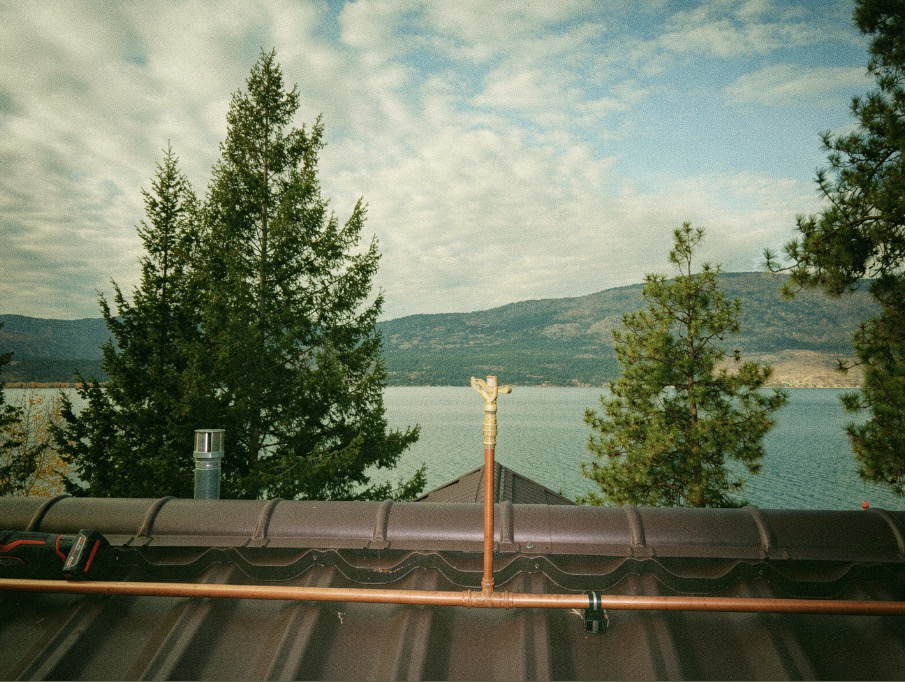
How Wildfire Sprinkler Systems Protect Your Property
"The purpose of Exterior Wildfire Sprinklers (i.e. rooftop sprinklers) is to raise the relative humidity of an area by creating a “humidity bubble” around structures and to dampen the roof and surfaces to extinguish airborne embers created by wildfire". --REGIONAL DISTRICT NORTH OKANAGAN
How sprinklers reduce ignition risk.
The humidity bubble
Fine water droplets evaporate and raise the relative humidity in the air around your home. Higher humidity and cooler air reduce ember ignition, and radiant heat near the structure.
Wetting combustible materials
Roofs, eaves, decks, siding, mulch, and vegetation absorb water, raising their fuel moisture content. Wet fuel needs far more heat energy to dry out before it can ignite, because water absorbs heat as it evaporates.
Stopping embers
Most homes ignite from wind-blown embers, not the main flame front. Wet surfaces make it much harder for an ember to start a fire where it lands.
Activate
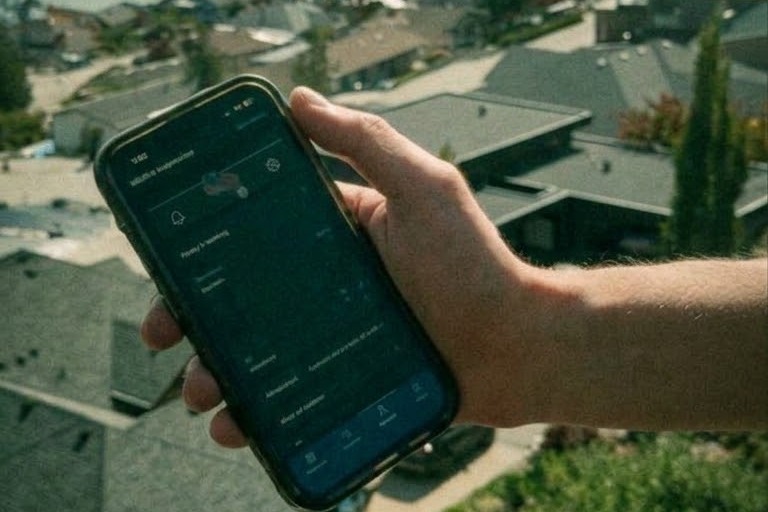
The system is started, manually or remote controlled. Evacuated or travelling? Control the system from your phone. Anywhere, anytime.
Humidity Level
Sprinklers raise humidity around the home while soaking roofs, decks and nearby vegetation.
Ember & heat resistance
Wet, humid surroundings resist ember ignition and soften radiant heat as a fire approaches.
An honest note
Sprinklers reduce risk but don't guarantee protection. They work best alongside FireSmart and defensible-space practices: cleared gutters, a non-combustible zone near the home, trimmed vegetation and fire-resistant building materials. We design every system with that bigger picture in mind.
What's in a system.
Every installation is custom, but most systems share these building blocks.
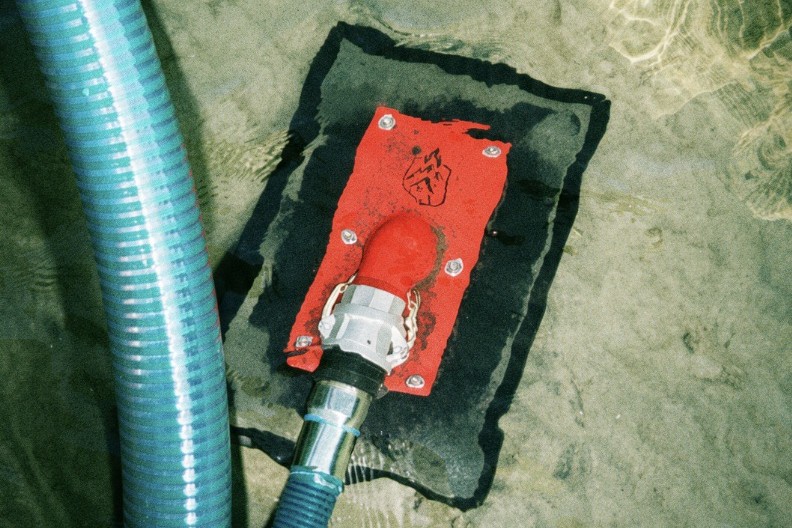
Water source
Lakes,pools,ponds,cisterns, and irrigation are all examples of water sources we have used.
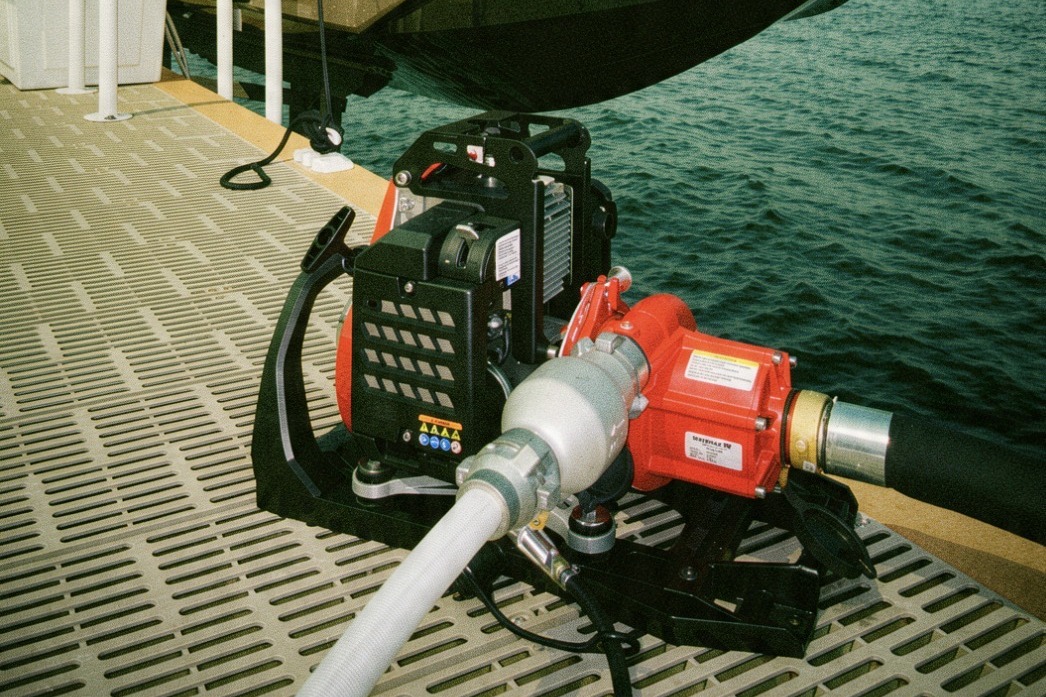
Pump
Delivers steady pressure to every zone, sized for your property's elevation and layout.
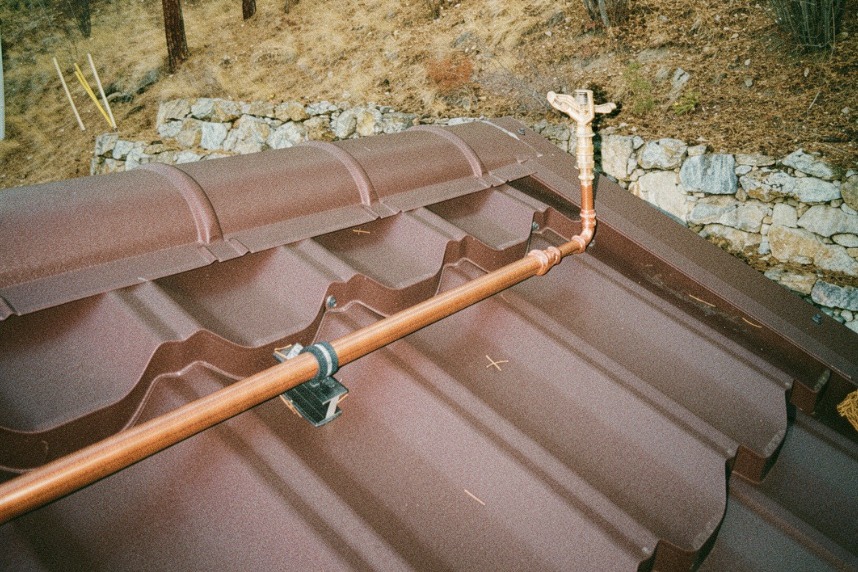
Piping
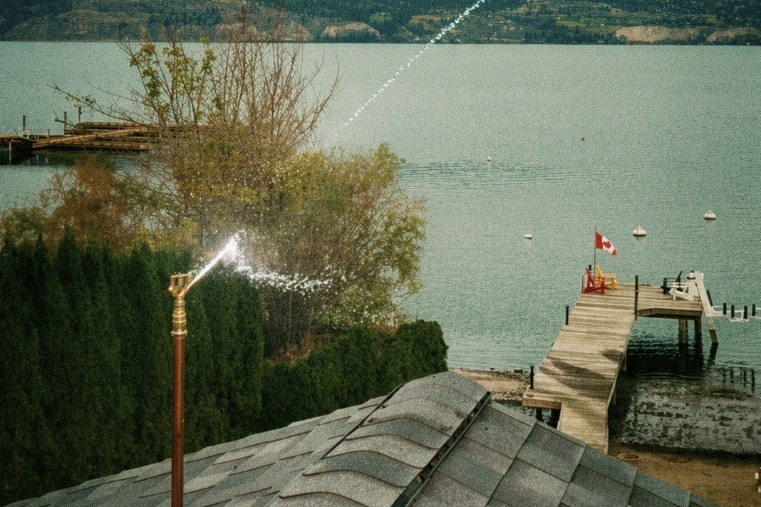
Discreetly routed type L copper pipe runs along to the roof to carry water to each sprinkler head.
Roof & perimeter heads
Sprinkler heads can be strategically placed on ridges, eaves and the perimeter spraying water up to 50ft each.
Controller
The brain of the system. Control the pump or the valve directly from your phone.
Sensors
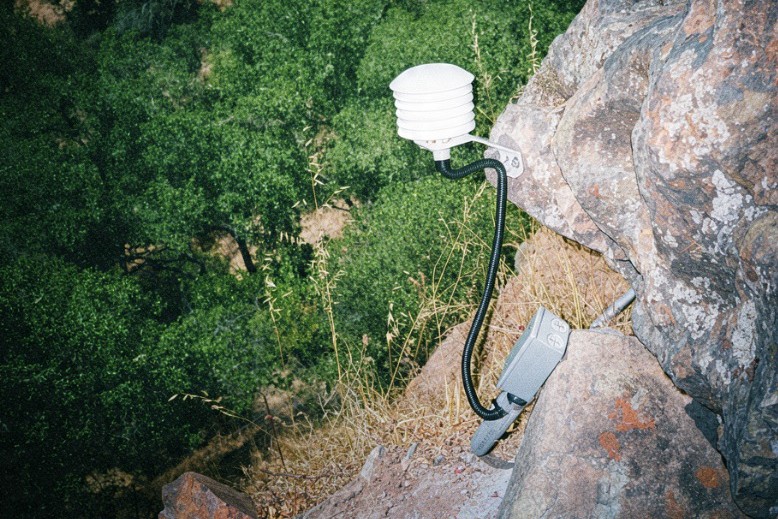
Temperature, humidity, flame, and ember sensors can activate the system automatically.
Designed to run without municipal water or power.
Wildfires often cut power and municipal water pressure. Our systems are designed to run independently, exactly when they're needed most.
Water
We draft water from lakes, pools, ponds, or cisterns so you don't rely on municipal water, or take pressure away from the firefighters who need it.
Power
If the system needs it, power is supplied from an automatic backup generator so you can control the system or run the pump.
Connectivity
Valves or pumps are controlled by SMS or WIFI, so you can control the system from anywhere.
Get your free wildfire risk assessment.
Tell us about your property and we'll be in touch within one business day to schedule a free, no-obligation on-site visit.